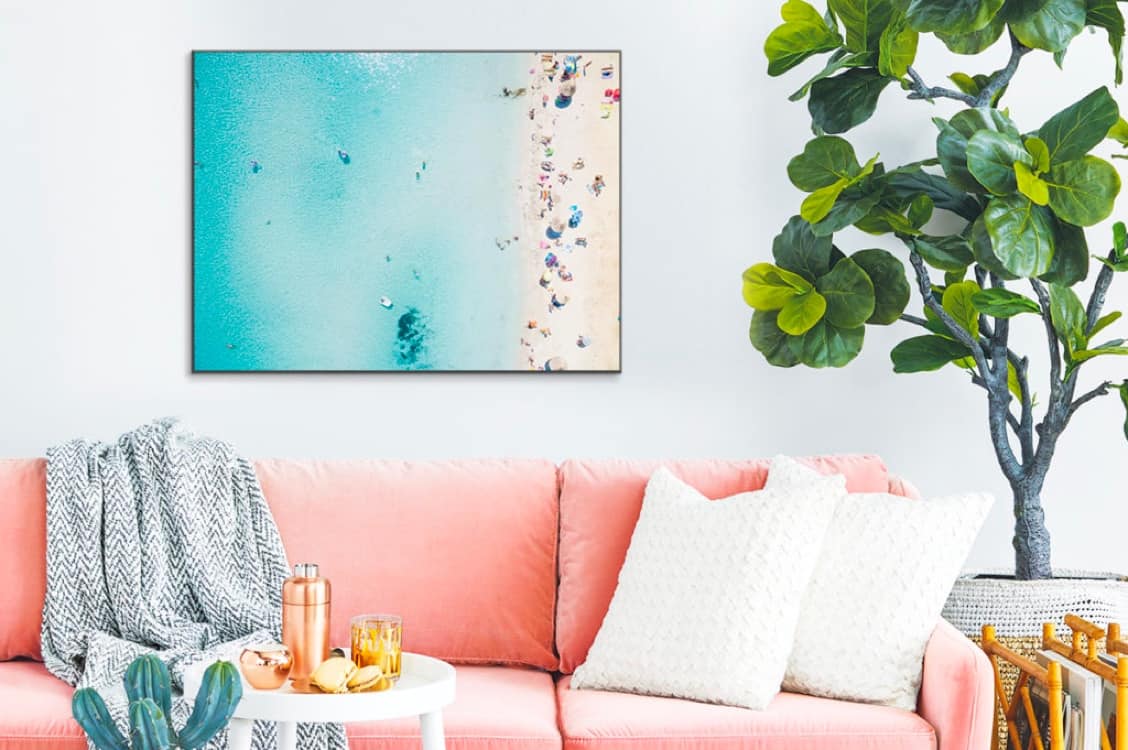
A dark wall makes every frame look sharper and turns the wall itself into part of the display. Whether you already have a charcoal or graphite wall or are only thinking about painting one, these five ways will help you hang art with confidence.
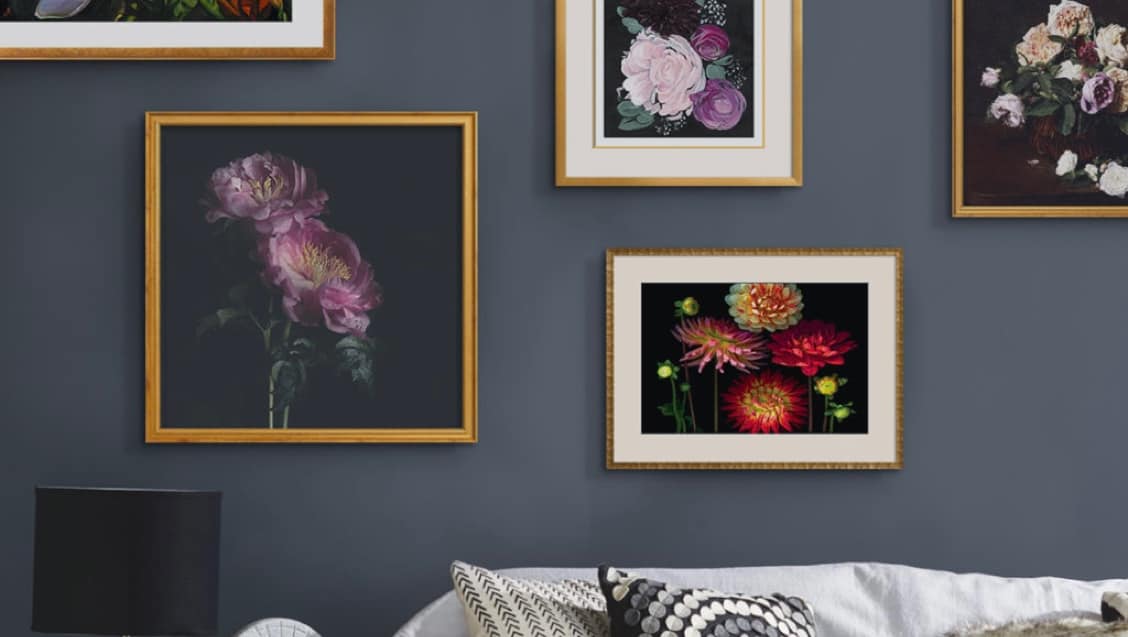
Gallery walls stand out against dark paint, so this is the place to mix sizes and subjects. Keep the frames in one colour, such as gold or matte black, and leave gaps of about 5 cm between them. Lay the arrangement out on the floor first, then transfer it to the wall with a level.

When a wall is already full, give one piece the whole space. Hang a single large work at eye level, with its centre about 150 cm from the floor. Large works such as Adam Schwartz's Bull Figure, Mixed Media (stoneware, white glaze, 140 x 110 cm) need that room to breathe.
Works from one series look stronger when they hang together. Jordan Pittman often paints in sets of three to five, and a row of matching pieces on a dark wall reads as one larger work. Keep the same spacing between pieces and align the centre line of each one.
Dark walls also suit objects that sit in front of them. A ceramic plate on a narrow ledge, or a hand-built figure on a shelf, stands out against the wall far more than it does on white. Turquoise glazes, such as the one on Sasha Grigoryan's Angel on a Turquoise Plate, look especially vivid against charcoal.
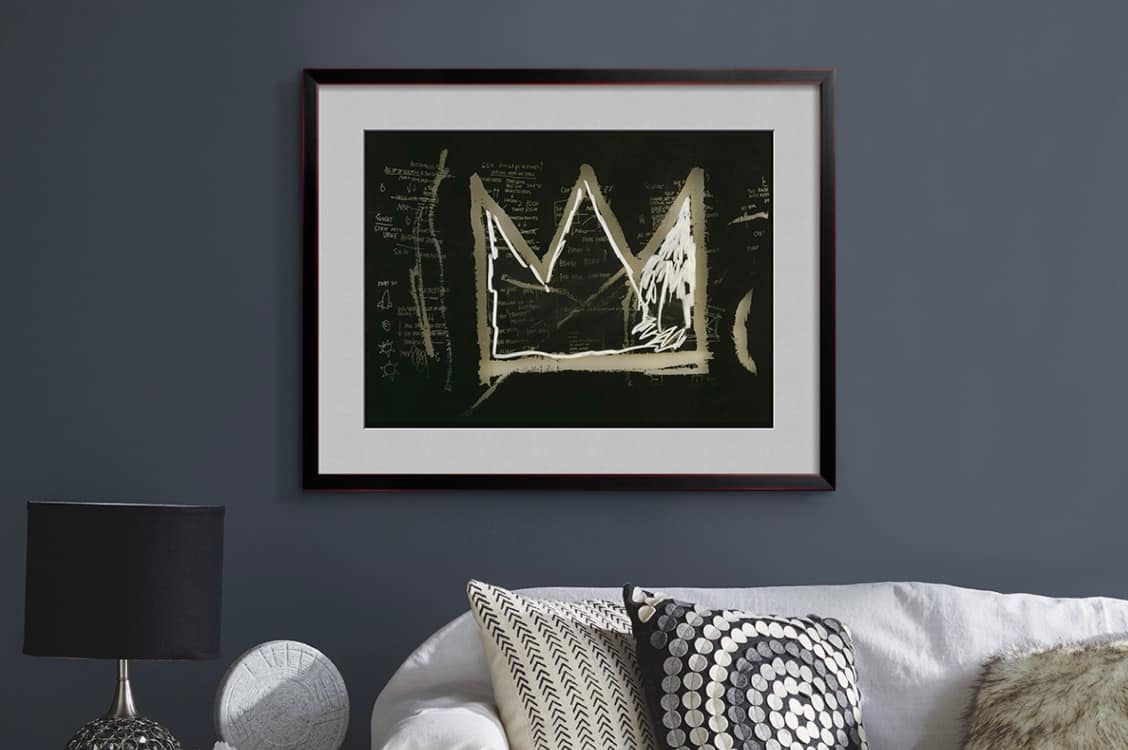
A dark wall absorbs light rather than bouncing it, so lighting matters more here than on white. Use a narrow-beam picture light or a track spot angled down at about 30 degrees, and choose a warm bulb around 2700K so that ochre and turquoise keep their character.
About the author. Aidana Rakhimova is the Founder and Director of Focus Gallery in Almaty. She works with the gallery's artists and clients on how each piece is hung, lit and presented.